

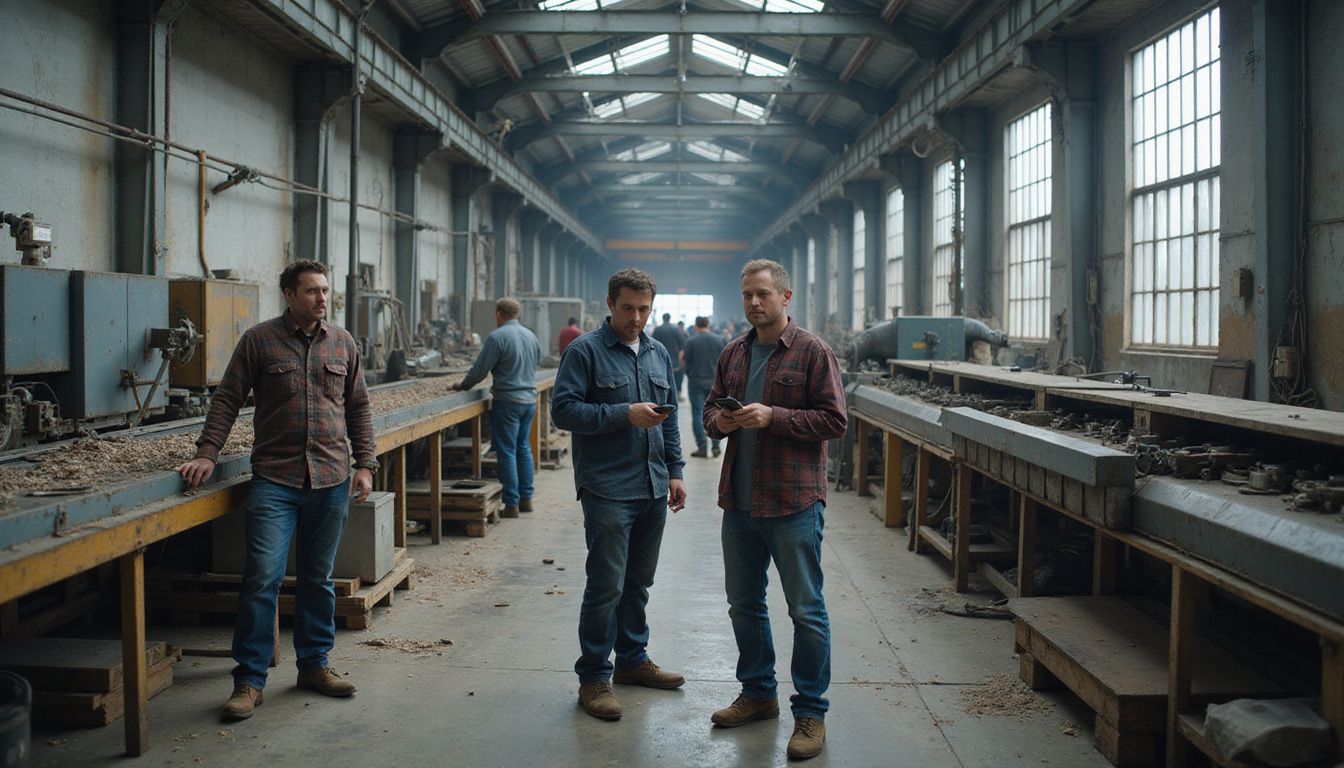
The Future Of ERP: Top Logistics & Manufacturing In 2026
Does your ERP feel like it’s always a step behind the shop floor and the warehouse? In The Future Of ERP: Top Logistics & Manufacturing In 2026, the big shift is simple: ERP stops being a monthly reporting tool and becomes a live operating system for your supply chain.
Slow data, scattered systems, and rising costs are the signals that it’s time to modernize.
Next-gen Enterprise Resource Planning for logistics and Manufacturing Systems is built on cloud-native, composable architecture, with AI, RealTime Analytics, and IoT integration baked in.
I’ll walk you through the practical trends, what they mean for day-to-day work, and how to make smart choices without getting buried in buzzwords.
Key ERP Trends Shaping Logistics and Manufacturing in 2026: The Future Of ERP: Top Logistics & Manufacturing In 2026
ERP trends in 2026 are pushing the same goal from different angles: faster decisions with fewer handoffs.
If you want real Operational Efficiency, focus on the systems that connect planning, execution, and finance with clean Data Integration.
- AI in the flow of work: automation that handles routine tasks and flags exceptions you actually need to see.
- IoT-connected operations: live machine, inventory, and shipment signals instead of after-the-fact updates.
- Composable ERP: modular capabilities you can swap and improve without a full re-implementation.
- User Experience matters more than ever: if people hate the screens, they will work around the system and your data breaks.
AI-Driven Automation and Predictive Analytics
In 2026, the best ERP teams use AI to shrink the distance between “we noticed a problem” and “we fixed it.”
Think of this as a move from dashboards to guided actions, where Predictive Insights show up inside the workflow that can resolve the issue.
Good AI does two jobs: it predicts what’s likely to happen, and it tells you what to do next.
If you want AI to pay off, start with the processes that already have clean inputs and clear outcomes, like procurement follow-ups, invoice matching, inventory exceptions, and maintenance scheduling.
In recent product updates, SAP’s Joule is described as reducing some pricing update tasks by up to 90%, and Microsoft’s release plan lists a supplier communications agent for procure-to-pay with general availability in March 2026.
- Automate the boring, keep a human for the risky: auto-create drafts, suggestions, and routings, then require approval for spend, schedule, or quality-critical actions.
- Make “exception-based work” the default: your planners should manage the outliers, not scroll through normal orders all day.
- Use Predictive Modeling where timing is everything: late supplier confirmations, expiring inventory, and maintenance windows are usually faster wins than “perfect forecasting.”
- Measure impact in hours, not vibes: track cycle time (RFQ to PO, pick to ship, order to invoice) before and after automation.
A common pitfall is trying to “AI your way out” of messy master data.
Fix item, location, supplier, and BOM quality first, or your model will learn the wrong patterns faster than your team can correct them.
Real-Time Visibility Through IoT Integration
IoT integration is where ERP gets its “eyes and ears.”
Sensors and edge devices can stream location, temperature, vibration, and utilization data so your ERP and analytics tools stop guessing.
Live sensor data turns guesses into clear actions.
If you want real-time visibility that holds up in production, you need consistency in how data gets published and shared.
That’s why standards show up so often in serious smart manufacturing programs, like OPC UA (standardized under the IEC 62541 series) for industrial interoperability, MQTT (ISO/IEC 20922:2016) for lightweight messaging, and GS1 EPCIS/CBV 2.0 (published June 2022) for sharing “what, when, where, why, and how” traceability events, including sensor data.
- Start with your “critical signals” list: top 10 downtime causes, top 10 late-shipment drivers, and top 10 quality escapes.
- Pick a single event model: define what an “arrival,” “consumption,” “completion,” and “shipment” event means, then map every device to that model.
- Design for bad connectivity: buffer at the edge so a network blip doesn’t create data gaps or duplicate events.
- Close the loop: visibility is nice, but the payoff comes when the ERP triggers actions (maintenance work orders, re-plans, carrier changes, holds).
If you operate in food manufacturing or distribution, traceability is also a compliance issue, not just a performance one.
FDA notes the original Food Traceability Rule compliance date was January 20, 2026, and that Congress directed FDA not to enforce the rule before July 20, 2028.
Cloud-Native and Composable Architectures
Cloud-native ERP is about speed and reliability, but composable architecture is about Flexibility.
You break capabilities into modules (often microservices and APIs), so you can change part of the system without stopping everything else.
| Architecture choice | What it feels like in real life | Best use |
|---|---|---|
| Monolithic ERP | One big upgrade path, changes ripple everywhere, integrations take longer | Stable operations with limited variation and strong internal ERP expertise |
| Composable ERP | Swap or improve modules, add capabilities faster, integrations become a core design job | Fast-changing supply chains, multi-site growth, mergers, new channels, automation-heavy operations |
| Hybrid (common in manufacturing) | Cloud ERP with on-site MES, historian, and edge computing for latency and resilience | Plants with strict uptime needs, older equipment, or specialized shop-floor constraints |
Composable does not mean “random apps glued together.”
It means you intentionally standardize your data contracts (items, orders, lots, assets, costs), then plug in capabilities that can evolve over time.
This is also where ERP programs win or lose on execution.
Gartner has warned that by 2027, more than 70% of recently implemented ERP initiatives will fail to fully meet their original business case goals, which is exactly why architecture decisions must stay tied to business outcomes and change management.
- Protect the core: keep finance, item master, and order integrity tight, then extend with apps and services.
- Budget for integration as a product: treat APIs, event streams, and data governance as ongoing work, not a one-time task.
- Build for upgrades: minimize custom code inside the ERP, and push unique logic into approved extension layers.
Industry-Specific ERP Solutions for Logistics and Manufacturing
Industry-fit matters because logistics and manufacturing are full of edge cases, like lot traceability, catch-weight, quality holds, engineering changes, and multi-step production reporting.
The best Manufacturing Software setups use pre-built industry workflows, then add only the extensions that truly differentiate your operation.
One practical way to keep integrations sane is to lean on standards that define how business systems and plant systems should talk.
ISA describes ISA-95 (also known as IEC 62264) as a framework for integrating logistics systems with manufacturing control systems, and ISA published an updated Part 1 (Models and Terminology) in April 2025.
What “industry-specific” should include (so you don’t pay twice)
- Manufacturing execution alignment: work-in-process reporting, scrap, rework, quality checkpoints, and real labor capture.
- Inventory optimization features: lot and serial tracking, bin strategies, cycle counting, and reason codes that actually match how your teams work.
- Lean manufacturing support: kanban signals, backflushing where appropriate, and exception alerts that keep planners focused.
- Transportation and warehouse reality: wave picking, cross-docking, dock scheduling, and mobile scanning for execution.
Security and governance for connected operations
When you connect equipment, scanners, and suppliers, cybersecurity stops being “an IT thing” and becomes an uptime issue.
NIST released the Cybersecurity Framework 2.0 on February 26, 2024, and it also publishes SP 800-82 Rev. 3 (September 2023) as a guide for operational technology security.
- Segment what matters: separate plant networks, enterprise IT, and vendor access so one incident does not spread.
- Control identities end to end: devices, service accounts, and users should all have explicit permissions and rotation plans.
- Plan for “safe failure”: decide what happens when cloud access drops, especially for shipping, receiving, and production reporting.
The payoff is real: stronger security also improves data quality, since you can trust the event stream feeding your RealTime Analytics.
Leading ERP Providers in 2026
There isn’t a single “best ERP” for everyone, but there are clear patterns in which platforms fit which operational shape.
If you shortlist vendors based on your process type (discrete, process, mixed-mode), warehouse complexity, and integration needs, your selection gets easier fast.
- For complex manufacturing: prioritize MES depth, quality management, and scheduling that respects constraints.
- For fast-moving distribution: prioritize WMS execution, scanning, replenishment logic, and transportation visibility.
- For multi-entity growth: prioritize strong financial consolidation, clean master data tools, and repeatable deployment.
- For automation-heavy operations: prioritize event streaming, APIs, and embedded AI for exception handling.
| Provider | Best For | Key Strengths (summary points) |
|---|---|---|
| SAP S/4HANA Cloud | Large multinational enterprises | Strong end-to-end Enterprise Resource Planning across finance, supply chain, and manufacturing. Embedded AI experiences through Joule for guided actions inside core processes. Scales well for multi-plant, multi-country operations with standardized processes. |
| Microsoft Dynamics 365 | Mid-sized and large logistics firms | Tight ecosystem fit for teams already standardized on Microsoft tools, which improves User Experience and adoption. Copilot-driven assistance for planning and execution scenarios, helping teams act inside the workflow. Strong extensibility for Automation Technologies through low-code workflows and integration patterns. |
| Oracle NetSuite | Mid-sized businesses | Cloud-first ERP that connects finance, inventory, and fulfillment in one system. Strong warehouse execution options, including mobile RF barcode scanning, task management, and cycle counting features in NetSuite WMS. Good fit for multi-location operations that need consistent processes and fast rollouts. |
| Infor CloudSuite | Manufacturing and supply chain sectors | Industry-focused ERP suites with manufacturing-centered workflows. AI-driven demand forecasting and demand sensing options to support Predictive Insights and inventory decisions. Helpful for organizations that want stronger vertical fit with less customization in the core. |
| Epicor Kinetic | Complex manufacturing operations | Deep shop-floor capabilities through production management, quality management, and Advanced MES options. Embedded AI copilot features (Epicor Prism) aimed at faster decisions across procurement, logistics, and operations. Strong fit for job shops and mixed-mode manufacturers that need real-time execution feedback. |
| Next-Gen Platform Trends | All enterprise sizes | Shift from passive reporting to action-driven workflows powered by AI and automation. Composable architecture and API-first integration to protect Flexibility as processes change. Real-time visibility via IoT integration so planning stays connected to execution. |
A quick buying checklist you can use this week
- List your “must-not-break” workflows: receiving, shipping, production reporting, quality holds, invoicing, and month-end close.
- Define your integration spine: ISA-95 style boundaries between ERP, MES, and control systems, plus your event model for traceability.
- Choose your first automation wins: procure-to-pay exceptions, demand and inventory alerts, maintenance scheduling, and warehouse tasking.
- Pressure-test security: OT segmentation, vendor access, identity management, and recovery plans for both IT and plant environments.
Conclusion
Next-generation ERP will drive Operational Efficiency across logistics and manufacturing.
Cloud computing and composable architecture give teams more Flexibility and faster deployments, without treating every change like a full restart.
AI-driven Predictive Insights and RealTime Analytics turn data into quicker, cleaner decisions, especially when your Data Integration and user experience are strong.
If you want a clear direction for The Future Of ERP: Top Logistics & Manufacturing In 2026, build around real-time execution signals, targeted automation, and security that protects both IT and operational technology.
FAQs
1. What will ERP systems do in logistics and manufacturing by 2026?
ERP systems will link logistics and manufacturing to cloud platforms by 2026. They will give teams real-time data for faster decisions.
2. How will AI and automation change the supply chain in 2026?
AI and automation will speed the supply chain and cut waste. AI will run predictive maintenance and find delays before they happen. Data devices and automation equipment will feed systems with live inputs.
3. Will companies need new skills to use ERP in 2026?
Yes. Staff will need skills in ERP integration, data analysis, and working with cloud platforms.
4. How can businesses start preparing now for ERP changes in 2026?
Move core systems to the cloud and standardize data. Train teams, use secure integrations, and run trials on one manufacturing line.
